
As the client moved ahead with large digital transformation programs, a few practical challenges started slowing progress:
Gaps in Specialized Skills
They needed quick access to cloud, data, DevOps, and modernization experts who could support programs remotely and plug into ongoing projects without delay.
Legacy System Limitations
Many core applications were heavily customized and built as monolithic systems, making upgrades, integrations, and faster releases difficult.
Delivery Slowdowns
With fixed internal team capacity, project backlogs grew, timelines stretched, and some transformation milestones were pushed out.
Regulatory and Compliance Demands
Operating in a regulated financial environment meant every change required secure development practices, clear audit trails, and strict governance.
Need for Flexible Scaling
The client wanted a fully remote, on-demand workforce model that could scale across regions without increasing permanent headcount.
During early discussions, it became clear that the client did not just need extra hands. They needed a delivery model that could fit into their existing ways of working without slowing anything down. Based on this, our team at DataToBiz proposed a structured staff augmentation approach aligned closely with their operating rhythm:
Embedded Remote Agile Teams
Our consultants joined existing Scrum teams remotely, taking part in sprint planning, daily standups, demos, and retrospectives just like in-house members.
Distributed Global Delivery Model
With consultants working across time zones, the client benefited from extended development and support coverage without being limited by geography.
Rapid Remote Onboarding Framework
Secure access setup, domain training, and environment configuration were completed within two weeks using structured remote onboarding processes and collaboration tools.
Governance & Communication Model
Weekly virtual steering meetings, shared KPI dashboards, and structured reporting ensured visibility, accountability, and alignment across teams.
Talent Continuity Plan
Backup resources and well-documented knowledge repositories reduced delivery risks and ensured smooth transitions when scaling or rotating team members.
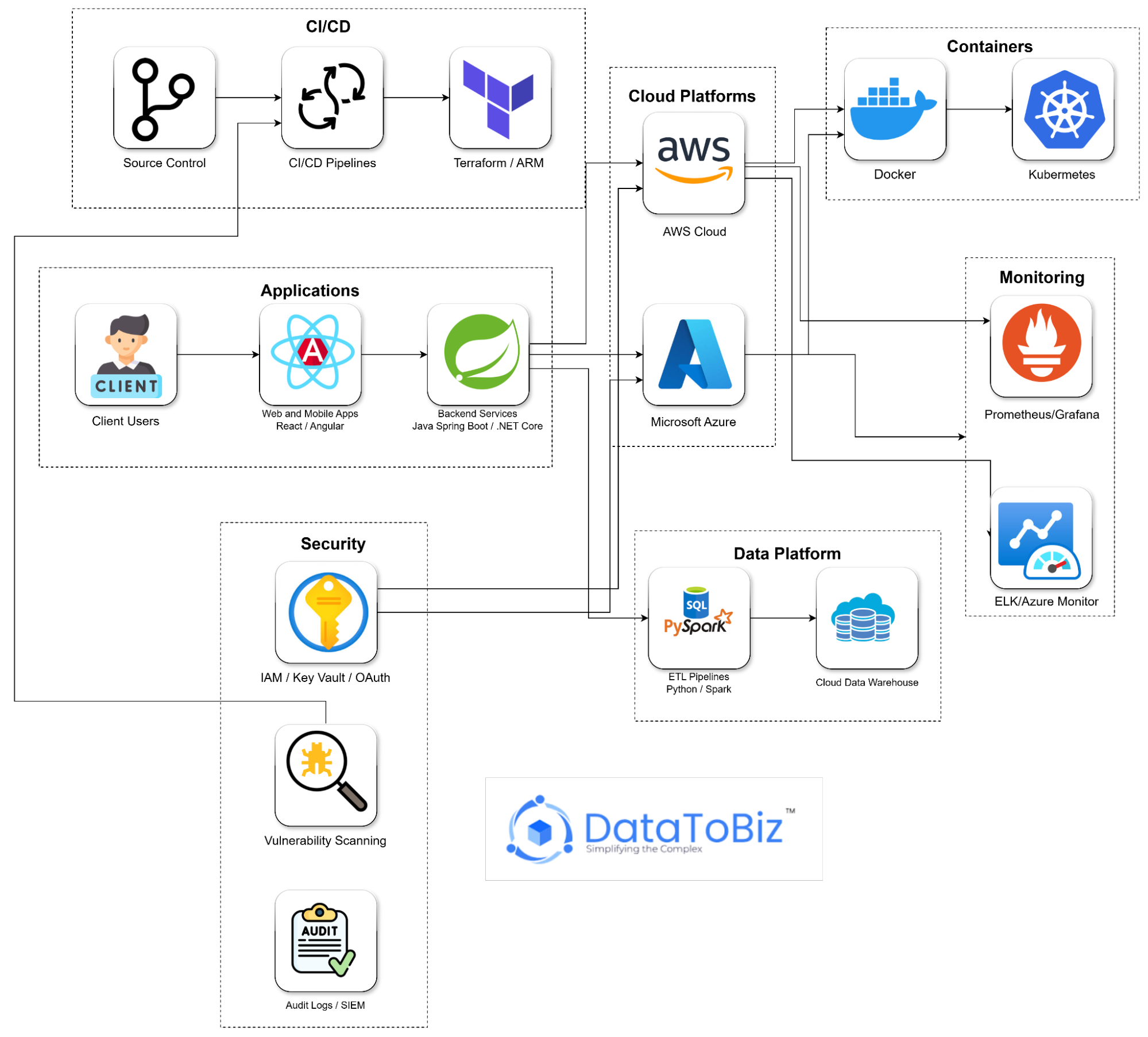
The augmented team worked securely within the client’s existing technology ecosystem, following established architecture and compliance standards:
Application Stack:
Java Spring Boot microservices, .NET Core APIs, and React and Angular front-end applications.
Cloud Platforms:
AWS and Microsoft Azure for infrastructure, storage, and compute services.
Containerization & Orchestration:
Docker and Kubernetes for deploying and managing microservices.
CI/CD Pipelines:
Jenkins, GitHub Actions, and Azure DevOps for automated builds, testing, and release management.
Infrastructure as Code:
Terraform and ARM templates for provisioning and managing cloud environments.
Data Platforms:
Python-based ETL pipelines, Apache Spark, Azure Data Factory, and cloud data warehouses for data processing and analytics.
Security & Compliance:
IAM, Key Vault, OAuth 2.0, vulnerability scanning, and audit logging embedded into development pipelines.
Monitoring & Reliability:
Prometheus, Grafana, ELK Stack, and Azure Monitor for performance tracking and incident management.
Accelerated Delivery Speed
Development velocity improved by 40% across modernization programs, helping teams clear backlogs and meet key transformation milestones faster.
Lower Staffing Costs
The client achieved approximately 35% cost savings compared to local permanent hiring, while maintaining delivery quality and output.
Faster Cloud Migration Progress
Around 65% of targeted legacy workloads were migrated to the cloud within the first year, accelerating overall cloud adoption goals.
Improved Release Frequency
Deployment cycles shifted from monthly releases to weekly deployments, enabling faster feature rollouts and updates.
Stronger Compliance Outcomes
Regulatory audits were completed with zero major findings, supported by secure development practices and structured governance.
Scalable Remote Workforce
More than 20 remote technical specialists were onboarded across parallel programs, allowing the client to scale delivery without geographic constraints.
For the client, the shift was not just technical. It was operational. By partnering with DataToBiz for staff augmentation services, they expanded delivery capacity and accelerated cloud adoption without increasing permanent overhead. The engagement created a flexible, scalable model that continues to support transformation initiatives across regions.
Financial Services & Banking
Middle East
Staff/Resource Augmentation
Briefly describe the challenges you’re facing, and we’ll offer relevant insights, resources, or a quote.

Business Development Head
Discussing Tailored Business Solutions

DataToBiz is a Data Science, AI, and BI Consulting Firm that helps Startups, SMBs and Enterprises achieve their future vision of sustainable growth.
DataToBiz is a Data Science, AI, and BI Consulting Firm that helps Startups, SMBs and Enterprises achieve their future vision of sustainable growth.