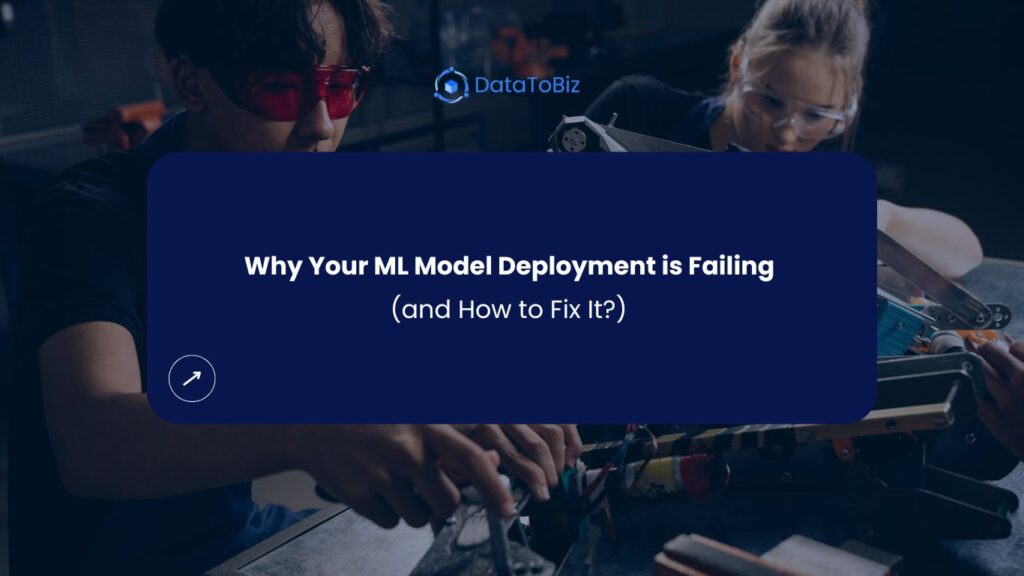
Machine learning models offer countless benefits to a business when implemented without glitches and optimized for large-scale use. Here, we’ll discuss the unexpected challenges in ML model deployment and ways to eliminate them successfully.
Machine learning is a subset of artificial intelligence that uses algorithms to detect patterns and trends in large datasets and enables systems to learn without being explicitly trained. It is useful in recommendation engines, image processing, etc.
Statistics show that the global machine learning market is likely to touch $192 billion in 2025. Around 72% of US organizations report using ML models as an integral part of their IT processes. BSFI and healthcare appear to be the leading industries to adopt machine learning solutions for fraud detection, image processing, faster diagnosis, and personalized treatment.
Machine learning models help enterprises automate various recurring and time-consuming activities. They can also increase the efficiency and accuracy of the outcome while handling an extra workload compared to humans. However, all this is possible when the ML models are developed and deployed without errors. This is where many businesses face various expected challenges.
ML model deployment is not as easy as it sounds. That said, businesses can overcome the challenges with strategic planning and expert guidance from MLOps consultants.
In this blog, we’ll read more about the hidden traps in ML model deployment and ways to eliminate them.
Why is ML Model Deployment Important?
Machine learning deployment is the key phase where an experiment or an idea will be implemented in real life. It is only when you deploy the ML model that you will know whether or not it is aligned with your needs and can handle the day-to-day workplace demands. Factors like reliability, accuracy, flexibility, scalability, efficiency, cost-effectiveness, etc., can be measured only when you deploy and use the ML model in real life.
The ML deployment process transforms the model from an idea or a prototype to a fully functional product or service. The multi-step process can sometimes throw unexpected glitches or challenges, making it hard to achieve the expected results. Such issues are not uncommon and can be resolved.
That’s why many enterprises partner with MLOps service providers right at the beginning of the project. This reduces the risk of last-minute challenges and unforeseen errors. Expert ML companies know how to handle complexities and ensure seamless ML model deployment. Many of them also offer long-term maintenance and priority support.
The Hidden Traps in ML Model Deployment
The hidden bottlenecks in model deployment are broadly divided into technical and non-technical categories. Factors like top-level decision-making, lack of clear understanding, etc., can also affect ML model deployment as much as technical factors like mismatch in IT infrastructure, legacy systems, and more.
Leadership Resistance
Every new move comes with risks. It’s not uncommon for business leaders and C-level executives to be hesitant to disrupt existing systems even when they understand the need for upgrades. It can also be due to trust in AI systems.
Technical Roadblocks
The technical ML model deployment challenges include incompatibility during integration, missing APIs, outdated legacy systems, old hardware, etc. Advanced technology needs hardware that is up to date and compatible with AI and ML requirements.
Mismatch in Expectations and Results
The mismatch in expectations and results happens at multiple levels. One is where you expect the ML model to magically fix all your processes. This doesn’t happen. It is crucial to be realistic about your expectations. Another is where the model might give about 80% accurate results during testing, but the business needs more than 95% to use the model for decision-making.
Data Privacy and Compliance
ML production and deployment require access to sensitive and personal information. Data is the key for machine learning algorithms to work. However, you cannot use anyone’s data without adhering to the global and regional data privacy regulations. You should comply with GDPR, HIPAA, or DPDP Acts designed for data protection to avoid lawsuits.
Data Security and Storage Challenges
Data storage and security determine how well you safeguard the business data from outsiders and prevent cyberattacks. Leaving data in truncated silos or not using adequate security systems can compromise the ML model. That’s where a data warehousing company steps into the picture. ML model deployment is not limited to integrating a tool with your systems. It is also about streamlining your data management processes.
Bias and Fairness Concerns
Data bias is a major challenge in deploying AI and ML models. Even when you achieve over 90% accuracy, you have to ensure that the data used to train the models is free from bias based on race, religion, demographics, culture, ethnicity, etc. Otherwise, it can widen the social gap as well as lead to legal complications for your business.
Post Deployment Latency
Time-to-value in machine learning deployment is a vital factor that determines the ROI you earn. It’s not enough if you successfully deploy the ML model. How you use it also matters. Do you monitor it to track KPIs? It is necessary to ensure the model is optimized. Otherwise, it could weigh down the processes and cause other delays.
Lack of Explainability
MLOps automation is great for accelerating internal processes. However, the ML models have to be transparent to prove that they are reliable and accurate. If you cannot see and explain how the algorithm uses data and arrives at the outcome, it can lead to trust issues. This makes it hard to implement ML tools in sensitive industries like finance, law, healthcare, etc.
Issues with Scalability and Efficiency
Can the ML model handle your future demands as well? Can it be scaled to meet increasing usage when your business grows? Will it continue to be quick and efficient as it is now? Don’t just plan for the present. Future-proof your ML models by partnering with a data engineering company.
Ways to Eliminate Traps in ML Model Deployment
Leveraging MLOps Platforms
Leveraging MLOps platforms is among the easiest ML and AI model deployment best practices. The tools have been developed to streamline the process from end-to-end, automate deployment, track every step, monitor KPIs, and so on.
Partnering with Service Providers
You don’t have to do everything on your own. There are experts offering MLOps consulting services for a reason. Partner with a company that has experience in your industry and can align its solutions to suit your needs and objectives. Sign up for long-term maintenance and support services.
Fairness Evaluation and Auditing
Aequitas or Fairness Indicators help ensure that the ML model is fair, unbiased, and reliable. These indicators identify biases in your model and offer ways to eliminate them. This can build trust in the system and increase transparency. From leadership to employees and customers, everyone can be assured that the model is fair and dependable.
End-to-End Data Engineering
ML model deployment is not an isolated process. You need proper data systems for the ML models to work effectively. This requires end-to-end data engineering consulting services customized for your business. From building a central data repository to optimizing the data architecture, every step is vital to making the ML model deployment a success.
Continuous Monitoring
ML and AI deployment monitoring is where you continuously monitor and track the model’s performance in real time and measure it against pre-defined KPIs. This is done to detect anomalies and fine-tune the model to ensure it continues to be accurate, relevant, and trustworthy. Timely adjustments also save money and prevent lawsuits in the long run.
Cost and Resource Optimization
The bottom line is that the ML model has to be worthy of the money and resources you spend on it. This is possible only when the entire process is optimized. Quantify the risks associated with ML model deployment and discuss them with the service provider to develop effective risk mitigation strategies.
Conclusion
An enterprise can eliminate the hidden traps by following the ML and AI model deployment best practices to streamline the process from end to end. Even if you have an in-house team for ML deployment, you can benefit from MLOps consulting services offered by third-party offshore companies.
With the right kind of support from experts in the industry, you can seamlessly integrate advanced ML models in your business to achieve your objectives and gain a competitive edge.
More in MLOps, Data Engineering Services Providers…
Data engineering services and MLOps go hand in hand in building a comprehensive, scalable, flexible, and agile data architecture in an organization. With tailored end-to-end data engineering, you can use high-quality data with your advanced machine learning models and get accurate and relevant outcomes in real-time. Accelerate time-to-market and enjoy higher ROI by making proactive data-driven decisions.
Read the links below to understand how data engineering services are the key to success.
- Why Strategies Fail Without a Data Maturity Assessment Framework?
- Analytics as a Service: A Modern Approach to Data Engineering
- Industry-Specific Analytics for Leaders: Key to Better Decision-making
FAQs
How do delays in ML model deployment affect my go-to-market timelines?
Delays in ML model deployment affect the go-to-market timeline as they mess up the subsequent steps in the process. You cannot use a faulty model to launch a new product or service in the market, as it can affect customer experience. However, the longer the delay, the greater the risk of a competitor launching their product and attracting your customers.
What’s the financial impact of slow ML deployment on my business outcomes?
Machine learning models are expensive and need regular maintenance/ upgrades. When the deployment process is slow, you have to spend more money on building and implementing the model in your organization. This requires additional resources and a bigger budget, which eventually affects other core functions. Such concerns can be overcome by partnering with DataToBiz to streamline and optimize ML model deployment.
Can faster ML deployment give me a competitive edge in my industry?
Absolutely! Faster ML deployment gives your businesses a competitive edge as you can be one step ahead of others in your industry. You can launch your product/ service before them and attract more audience to your business. That’s why many organizations hire DataToBiz to accelerate ML deployment and grab better market opportunities.
How do I ensure my ML investments start delivering ROI sooner?
You can ensure your ML investments deliver ROI sooner by clearly defining your business objectives, using quality datasets, evaluating the models thoroughly, and continuously monitoring the systems. All these activities and more are handled by DataToBiz when you partner with us for end-to-end ML model deployment.
What’s the risk of missed opportunities if model deployment takes too long?
There’s a high risk of missed opportunities if ML model deployment takes too long because we live in an ever-changing and highly competitive market where each business is trying to outdo its competitors. If you are too slow with your processes, the competitors will surpass you in many ways. This can reduce your customer base and affect your revenue.
Can optimizing deployment speed help me reduce overall project costs?
Yes, optimizing the deployment speed can reduce the overall project costs as it reduces the need for greater resource consumption and creates a robust and streamlined workflow. At DataToBiz, our certified professionals have excelled in ways to optimize ML model deployment, reduce costs, and increase ROI for businesses from diverse industries.
Fact checked by –
Akansha Rani ~ Content Management Executive