Don't Scale on a Weak Foundation

Revolutionizing Digital Payments with AI/ML-Powered Fraud Prevention

About Client

  • Headquartered in Stockholm, Sweden, this innovative fintech company specializes in digital payment solutions designed for small and medium-sized enterprises (SMEs), enabling seamless, secure transactions.
  • With a strong Nordic presence, the company operates throughout Sweden, Finland, Denmark, and Norway, empowering SMEs in the region with new payment technologies and localized support.

Problem STATEMENT

The client came to us while navigating a growing challenge, keeping digital transactions secure and compliant without slowing the business down. Their existing setup relied heavily on manual processes, which made fraud detection inefficient, compliance hard to scale, and risk management complicated

  • Inefficient fraud detection
    Fraud reviews were mostly manual, which slowed down investigations and increased the chances of errors slipping through.

  • High false positives and negatives
    The system flagged too many legitimate transactions as risky, while genuine fraud cases were still being missed.

  • Lack of AML controls
    There was no automated mechanism to consistently identify, monitor, and prevent potential money laundering activities.

  • Operational bottlenecks
    Compliance workflows depended heavily on manual intervention, creating delays and adding pressure on internal teams.

Solution

To address these challenges, our team delivered an AI-powered fraud detection and AML solution, working closely with the client’s internal teams to ensure security, compliance, and scalability across systems.

Data preparation and model training

  • Our data engineers worked with historical transaction data, cleaning and structuring both valid and fraudulent records.

  • We applied preprocessing techniques such as data cleaning, normalization, and feature engineering to improve model accuracy.

  • AI and ML models were trained to identify suspicious patterns using transaction behaviour and user activity data.

Real-time fraud detection

  • Our team integrated the trained ML models directly into the client’s core systems for real-time transaction screening.

  • Continuous monitoring and A/B testing were applied to ensure the models adapted to evolving fraud patterns over time.

AML monitoring system

  • We implemented customer identification, transaction monitoring, and suspicious activity reporting workflows.

  • Automated alerts were set up to help AML teams quickly investigate high-risk cases.

  • Our compliance specialists collaborated with key stakeholders to define alert thresholds and validate system performance.

AI chatbot for compliance and customer support

  • Our team built an NLP-based chatbot to support KYC processes and fraud-related queries.

  • The chatbot was trained to identify phishing attempts and flag suspicious activity.

  • It also assisted customers with routine queries like account balances and transaction history, reducing the load on support teams.

Technical Implementation

Data foundation and engineering

  • Our team built robust ETL pipelines to bring together transactional and behavioural data from multiple payment channels.
  • Data was cleaned, normalised, and enriched through feature engineering to create reliable, high-quality training datasets.

  • Sensitive customer information was anonymised and encrypted to meet GDPR and data privacy requirements.

Model building and optimisation

  • Fraud detection models were trained using techniques such as Random Forest, Gradient Boosting, and Neural Networks to distinguish between legitimate and fraudulent transactions.

  • Cross-validation and hyperparameter tuning were applied to improve accuracy and minimise false positives and negatives.

  • Imbalanced learning approaches, including SMOTE and cost-sensitive learning, helped address skewed fraud data.

Live fraud detection and streaming

  • Trained models were integrated into the client’s transaction processing systems through secure REST APIs.

  • Transactions were scored in real time, allowing anomalies to be flagged instantly.

  • A streaming pipeline using Apache Kafka and Spark Streaming enabled continuous fraud monitoring.

AML workflows and system integration

  • KYC and KYB modules were configured to support secure and compliant customer onboarding.

  • Transaction monitoring workflows were deployed to detect patterns such as structuring, layering, and unusual transfers.

  • Automated alerts and case management workflows were integrated directly with AML team dashboards.

AI chatbot for compliance and support

  • An NLP-based chatbot was built using NLTK, spaCy, and transformer models.

  • It was connected to the AML system to identify phishing attempts and suspicious user behaviour.

  • The chatbot was deployed across client platforms to handle fraud alerts and routine customer queries.

Ongoing monitoring and learning

  • A/B testing and feedback loops were used to fine-tune fraud detection thresholds over time.

  • Model drift detection and scheduled retraining ensured the system stayed effective as fraud patterns evolved.

  • Power BI dashboards gave AML teams clear visibility into fraud metrics and model performance.

Security, privacy, and compliance

  • All components were deployed in a GDPR-compliant cloud environment with role-based access controls.

  • End-to-end encryption and secure APIs were used to protect data in transit and at rest.

  • The overall architecture was designed in line with AML regulations, including EU AMLD and FATF guidelines.

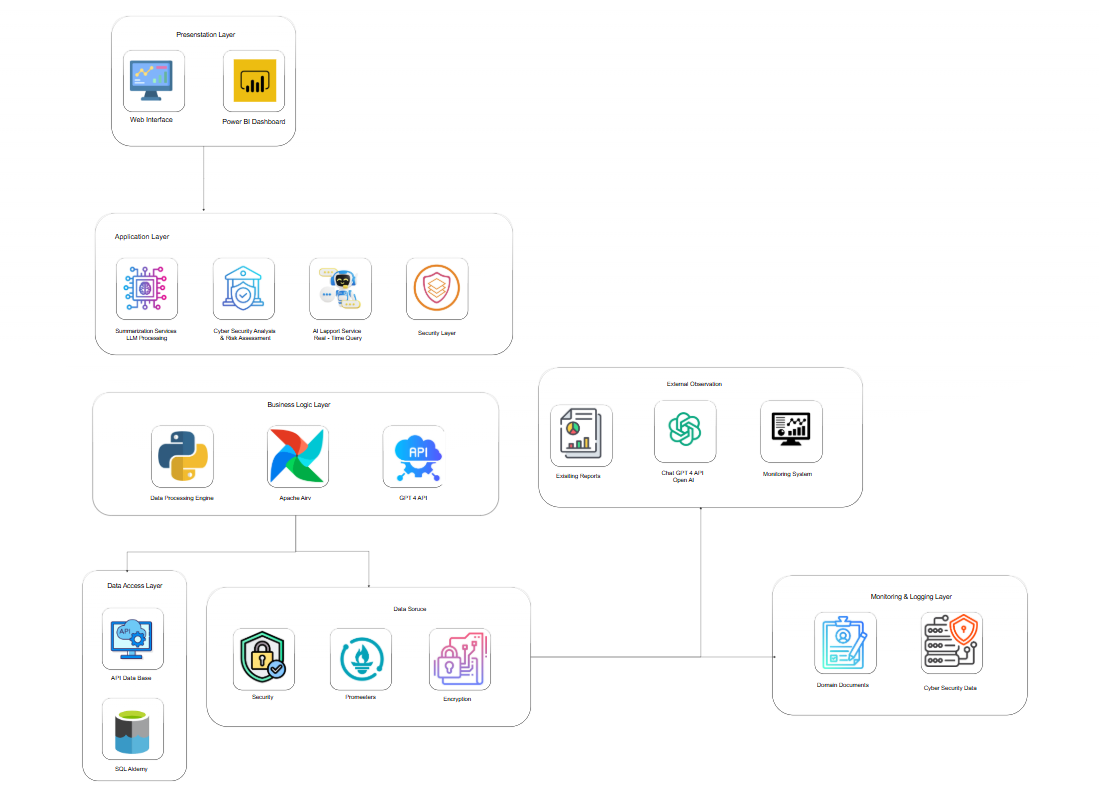
Technical Architecture

i ml fraud detection framework

Business Impact

Lower fraud exposure
Advanced AI-driven detection reduced fraudulent transactions by 47%, significantly limiting financial risk across digital channels.

High detection accuracy
Fraud identification models achieved 98% accuracy, enabling teams to act confidently on flagged transactions.

Stronger AML controls
Automated monitoring and alerts led to a 24% reduction in money laundering activities by identifying suspicious behaviour earlier.

Reduced support load
The AI chatbot lowered customer service inquiries by 19%, handling routine queries and fraud-related concerns without manual intervention.

Minimal manual reviews
Automation cut manual review effort by 88%, saving substantial time and operational costs for compliance teams.

Faster, more trusted transactions
Real-time screening enabled quicker, more secure transactions, improving customer trust and overall user experience.

By putting an AI-backed fraud detection and AML framework in place, the client was able to lock down transaction security without slowing things down. Compliance risks dropped, fraud and money laundering were significantly reduced, and customers felt more confident using the platform. At the same time, the solution scaled smoothly with growing transaction volumes, improved day-to-day efficiency, and delivered a faster, more reliable digital payment experience.

Related Case Studies

Drop Your Business Concern

Briefly describe the challenges you’re facing, and we’ll offer relevant insights, resources, or a quote.

Ankush

Business Development Head
Discussing Tailored Business Solutions

DMCA.com Protection Status