The client’s current EPPM platform was feature-rich but lacked the automation, analytics, and visibility needed for fast decision-making. They also faced:
Our client’s EPPM platform was rich in features but lacked the unified visibility needed to track projects from registration to completion. Data sat in silos across modules like Project Registration, Fund Allocation, and Milestone Tracking, making it difficult to see the big picture.
With minimal in-house skills in Power BI, SQL, and KPI framework design, the client struggled to convert raw data into actionable insights. Reporting was often reactive rather than proactive.
High reliance on manual reporting slowed down operations, introduced errors, and created bottlenecks in delivering critical updates to stakeholders.
Key processes like compliance tracking, fund disbursement monitoring, and performance metrics were handled manually, delaying decision-making and reducing accuracy.
Executive leadership needed dashboards and analytics fast. Beyond initial delivery, they also required long-term support, regular enhancements, and structured knowledge transfer to their teams.
To meet the client’s needs, together we suggested these:
To accelerate analytics, we quickly assembled a specialist team: a Solution Architect, a Data Engineer, a Full-Stack Developer, a Power BI Developer, a QA Engineer, and a Project Manager. This ensured every stage of the project had the right expertise on hand.
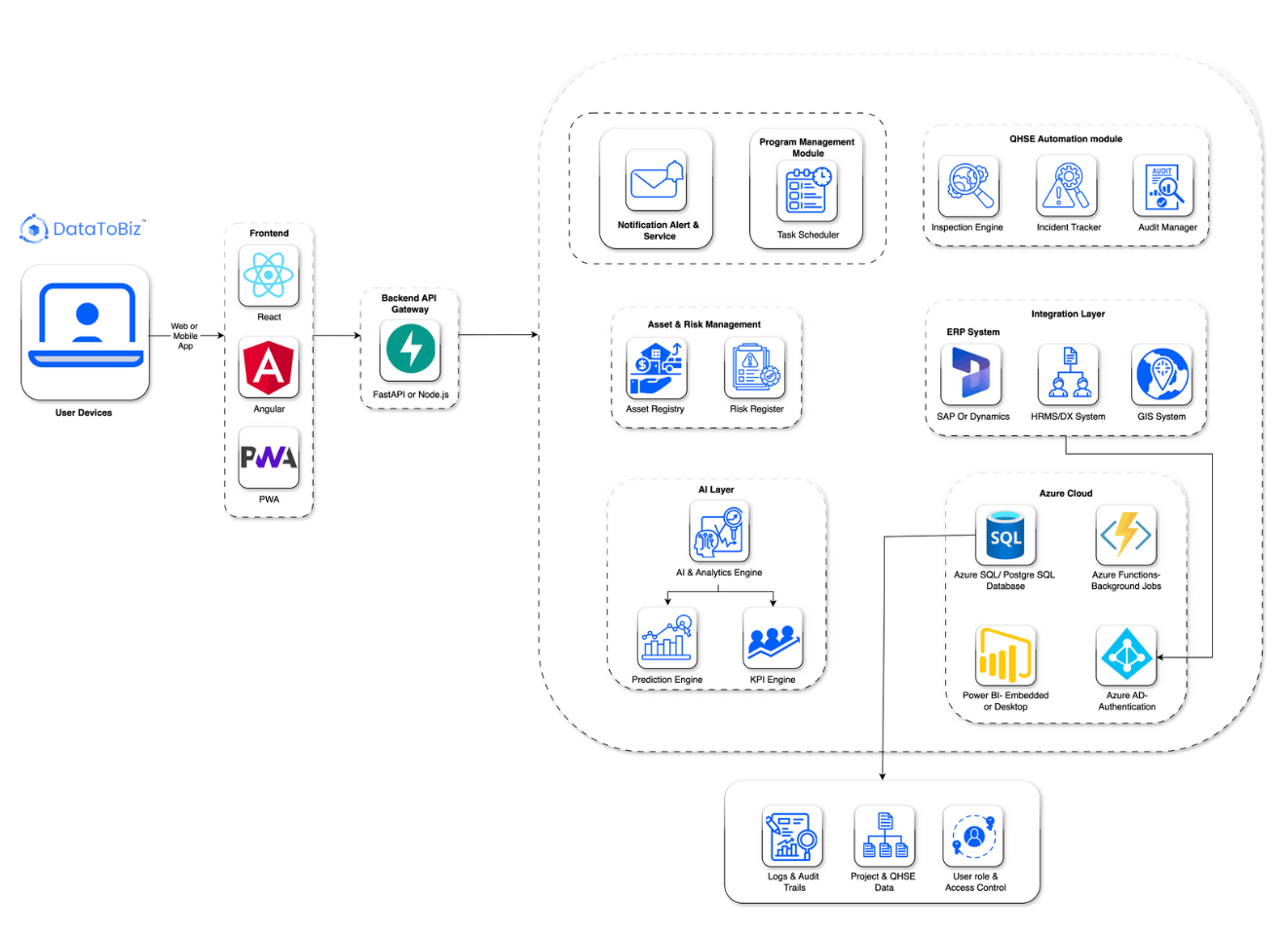
We pulled data directly from SQL-based EPPM backend tables, processing it with Power Query and SQL procedures. The data was then structured into a clean, star schema model built for performance, scalability, and faster reporting.
We developed role-based dashboards that gave clear visibility into fund disbursement, milestone progress, project health, and SLA adherence. With Power BI Row-Level Security (RLS), each user only accesses insights relevant to their role, keeping information secure and focused.
Working closely with stakeholders, we created a detailed KPI matrix covering financial, operational, and compliance metrics. Visualizations were optimized for web, mobile, and executive-level views, ensuring clarity for all audiences.
We set up a proactive enhancement pipeline to capture user feedback, maintain version control, and fix dashboard issues within defined SLAs. To ensure long-term self-sufficiency, we also provided comprehensive documentation and user guides for the client’s internal teams.
We built a centralized analytics setup using SQL Server and Power BI Service. Power Query M functions and DAX measures handled reusable logic, while a data gateway ensured scheduled refreshes and smooth on-premises integration.
Delivered 20+ interactive dashboards with real-time drilldowns and slicers. Designed a KPI matrix aligned to government standards and compliance requirements. Integrated Report Builder for printable, audit-ready reports.
Implemented RBAC and Row-Level Security for safe, role-based access. Conducted end-user training, created video walkthroughs, and prepared admin handbooks. Managed change through detailed support logs and release notes.
Live Power BI automation cut manual reporting efforts by 70%, freeing teams to focus on strategic tasks instead of repetitive data prep.
Achieved 100% transparency into fund disbursements and milestone progress, ensuring stakeholders could track every stage without delays or blind spots.
By simplifying the dashboard across departments and key stakeholders, approval times dropped by 60%, accelerating project execution.
Introduced self-serve BI capabilities, enabling data democratization across departments and reducing dependency on technical teams.
Upskilled internal teams to independently maintain and enhance dashboards, ensuring long-term sustainability of the solution.
Government & Public Sector
Middle East
Staff/Resource Augmentation
Briefly describe the challenges you’re facing, and we’ll offer relevant insights, resources, or a quote.

Business Development Head
Discussing Tailored Business Solutions

DataToBiz is a Data Science, AI, and BI Consulting Firm that helps Startups, SMBs and Enterprises achieve their future vision of sustainable growth.
DataToBiz is a Data Science, AI, and BI Consulting Firm that helps Startups, SMBs and Enterprises achieve their future vision of sustainable growth.